
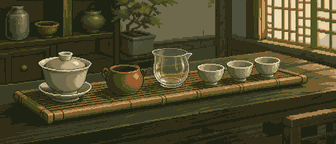
Teaware
Every vessel here is doing one of two things to your tea: changing its temperature, or changing its chemistry. Almost everything else said about teaware follows from those two, and the claims that do not follow from either are usually the ones nobody has measured. This section separates them.
- Gaiwanany tea, and the reference vessel for tasting one honestly
- Teapotbrewing a shared pot Western style
- KyusuJapanese green tea, especially sencha and gyokuro
- Yixing teapotblack, oolong and dark tea, one family per pot
- Chawanmatcha, thin and thick
- Infuserloose leaf without a dedicated pot, if you buy a large basket
- Kettleeverything, and green tea specifically if it has a set point
- Teacupmatching the cup to the brewing method rather than the other way round
- Mugone long infusion, or grandpa style with whole leaf
- Houhingyokuro and premium sencha at 50 to 70 °C
- Shiboridashiconcentrated high-grade gyokuro, a few mouthfuls at a time
- Tetsubinheating water, not steeping leaf
- French pressrobust black tea and herbals, poured out in one go
- Cold brew bottlegreen and yellow tea, and Darjeeling
- Thermostea away from the kitchen, and long stable steeps
- Double-walled glassholding temperature through a long steep, and seeing the leaf
- Cha Haievening out the liquor and stopping the steep on time
- Aroma cuparomatic oolong, and nothing you drink out of it
- Yuzamashigetting water to 50 to 70 °C without a thermometer
- Chasenusucha at 80 prongs, koicha at around 70
- Chashakurepeatable matcha doses and lifting fragile leaf
- Strainercatching fines from a pot with no filter of its own
- Cha Heseeing and smelling the leaf before it is committed
- Cha Pangongfu sessions where you pour water freely
- Caddyeverything except tea you mean to age
- Tea cosya leaf-free pot you will drink over half an hour
- Tea petcompany, and somewhere for the rinse water to go
What it is
Teaware splits into vessels you brew in, vessels you pour into, and tools that never touch the liquid. What decides how a brewing vessel behaves is mass and porosity. Mass governs how much heat the vessel takes out of your water on contact, which for a heavy cold pot is around twenty degrees. Porosity governs whether the body absorbs anything, which for glazed porcelain is nothing and for unglazed clay is measurable.
What it does to your tea
Temperature is the larger of the two effects and the one people underestimate. A cold cast iron pot pulled boiling water down to 80 degrees Celsius on contact and 76 after four minutes in Francl's measurements, taking a black tea below its brewing range before the timer started. The same pot pre-warmed started at 90 and lost only five. That single habit is worth more than most of the equipment you could buy instead.
What people get wrong
Trusting the material's reputation over its mass. Glass is routinely described as unable to hold heat and unsuitable for oolong and black tea; measured beside cast iron, the glass pot held its water six degrees warmer at four minutes, because it weighed a third as much. Unglazed clay is described as improving aroma; the one study that measured aromatics in clay-brewed tea found fewer of them, not more.